Implementing a spill response program with your supplier
When liquid spills happen in industrial environments, the cost isn’t just a dirty floor. You’re dealing with safety risks, environmental exposure, potential regulatory breaches, and unplanned downtime. That’s where a specialised B2B supplier of spill control products comes in. Selling spill kits is easy. Helping your customers build a reliable spill response program is where you stand out as a reseller. That is exactly where your B2B spill control supplier should be working alongside you.
This guide is written for resellers who sell into mining, construction, utilities, transport, local government and agriculture. Use it as a checklist for what you should expect from your supplier and how you can turn that support into value for your customers.
When should resellers bring their spill control supplier in?
Do not wait until your customer has a major spill or a bad audit result. It is the right time to involve your supplier when your customer is:
- Preparing for audits or certifications
- Completing a risk assessment and identifying gaps
- Adding new fluids such as chemicals, fuels or oils, or changing processes
- Working with spill kits that are out of date, under-spec or poorly labelled
Early involvement lets you and your supplier design a complete spill response system for the site, instead of dropping in a few kits that only patch problems.
It also positions you as a partner who can help with compliance and risk, not just as a supplier of boxes and catalogues.
How a spill response program works when you team up with a reliable supplier
A good program for your customer usually includes:
- Kits and containment that match the risk in each area
- Clear layouts and signage for kit locations and emergency contacts
- Training or toolbox talks for staff and contractors
- Inspection and maintenance schedules with simple logs and checklists
- Replenishment processes that trigger refills after use or inspection
- Documentation that lines up with audits and regulatory requirements
A good B2B supplier can help you build these elements into your offer. They can:
- Recommend the right kit mix by area
- Provide layout guidance and example plans
- Supply documentation, checklists and training support
- Co-brand materials so they present as your program
You keep the customer relationship. A good B2B supplier focuses on the technical backup and structure that helps you win and keep that relationship.
Work with supplier to calculate absorbency requirements
Sizing spill kits by guesswork is risky for you and for your customer. It increases the chance that a kit will be under-spec when it matters most.
A simple process you can run with your supplier:
- Identify the largest credible spill in each area, such as a single drum, an IBC or a tank line.
- Factor in fluid type and viscosity. Thick oils and greases behave very differently to water like chemicals.
- Consider response time. How quickly can your customer’s team reach and control a spill in that area.
- Add a safety margin to allow for uncertainty and worst-case conditions.
This will be translated into specific kit sizes, absorbent types and quantities. You get clear, defensible recommendations you can put into your proposal. Your customer gets confidence that their spend is based on real risk, not guesswork.
Making replacement and replenishment a recurring revenue stream
Spill readiness only exists if kits are complete and usable. This is also where resellers can build predictable repeat business.
With the right supplier support, you can help customers set clear rules for when to replace or replenish:
- Immediately after deployment, top up used absorbents and components
- At expiry, where components like PPE, neutralisers or some pads degrade over time
- During scheduled inspections, if items are damaged, contaminated or missing
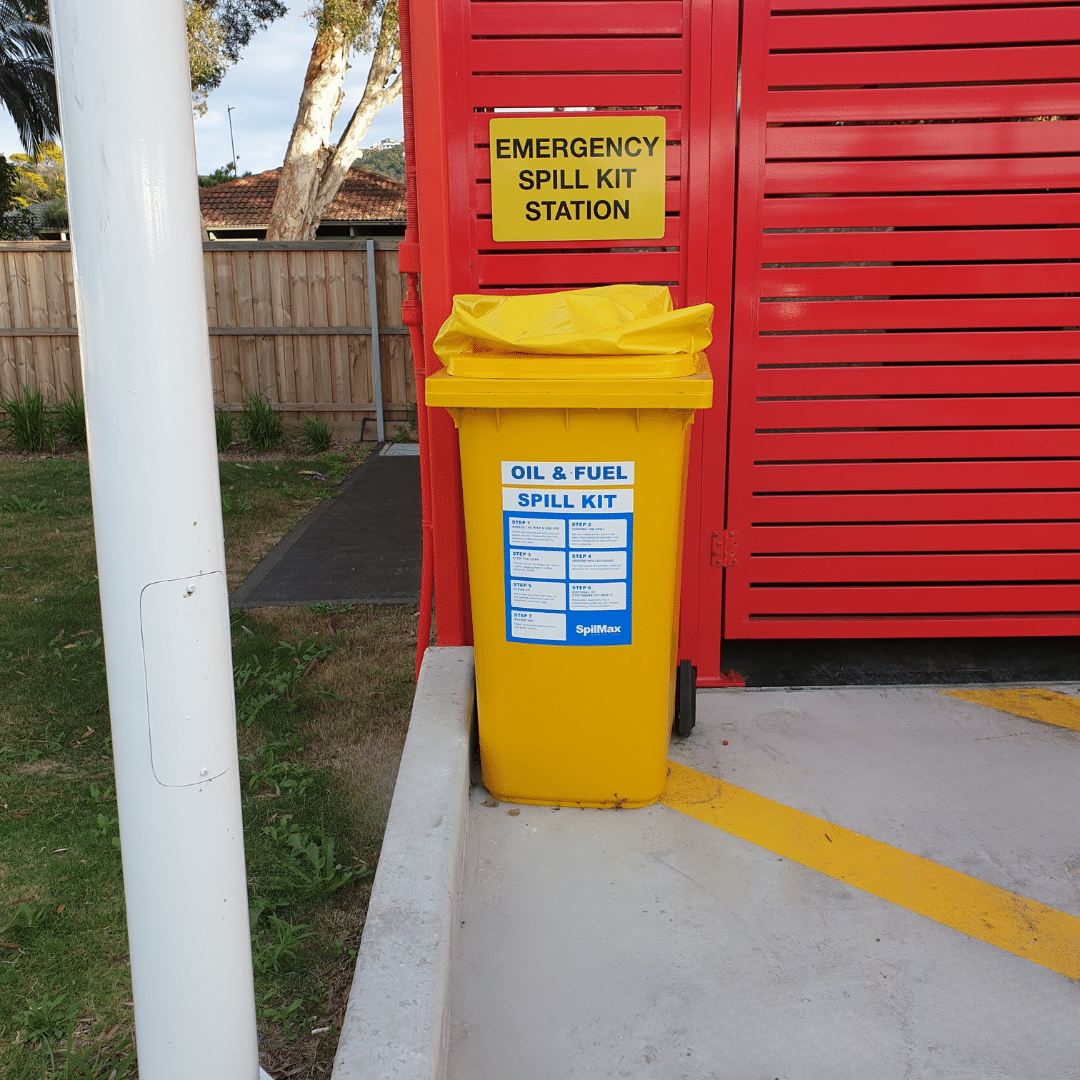
These are typically available in portable (bags, wheeled bins) and static (wall-mounted or station-based) formats.
Designing on-site layouts: how to position you as the expert
Many customers know they need spill kits but are unsure where and how many. This is a natural moment for you to add value.
A good supplier can support you with practical layout guidance so you can advise customers with confidence. For example:
- Place spill kits near fluid storage and transfer points, loading docks and decanting stations
- Position kits along internal transport routes where spills are most likely
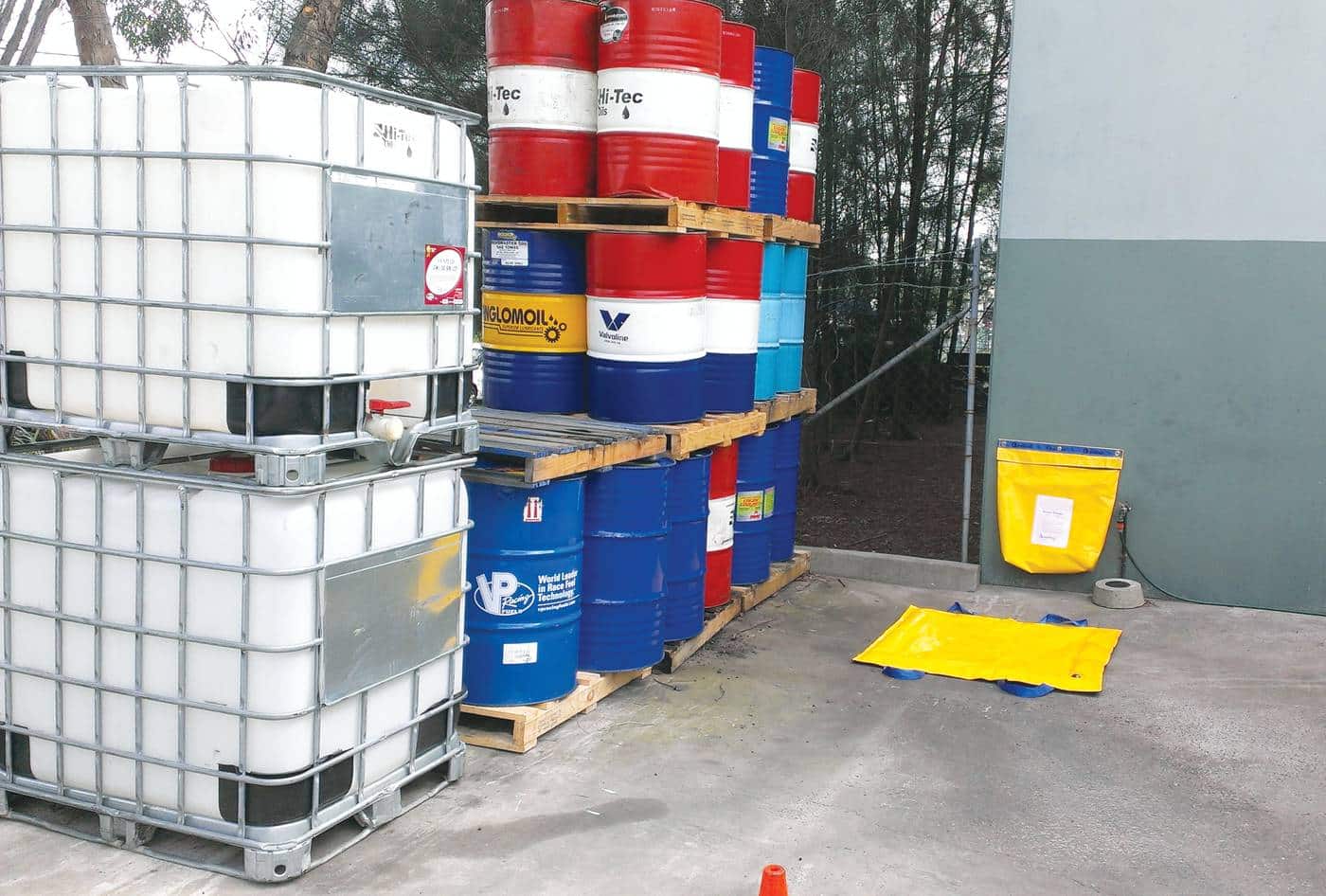
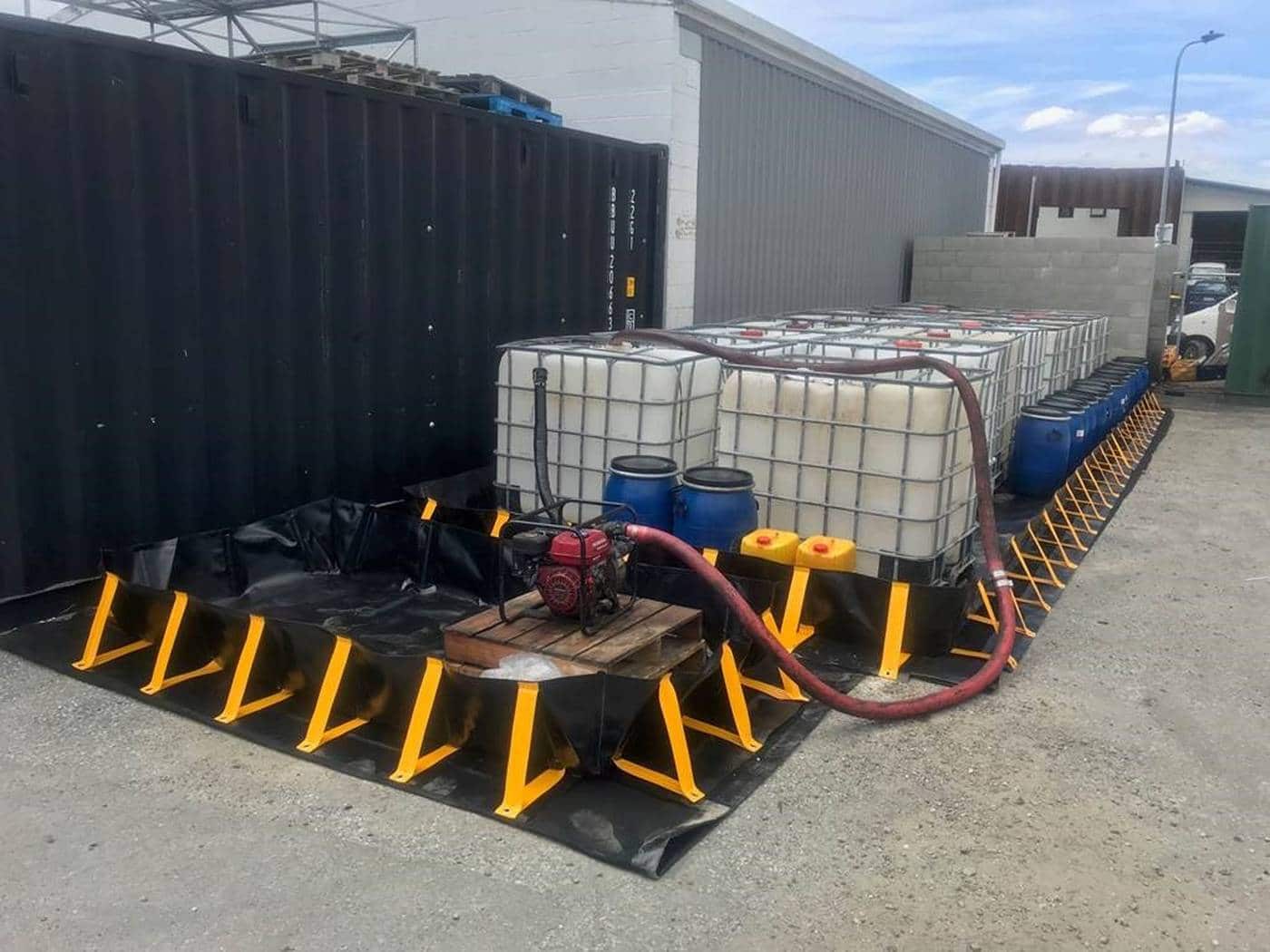
- Use spill pallets and bunds under drums and IBCs, and at decanting or mixing stations
- Protect stormwater inlets and drains with covers or surrounds in any area where hazardous liquids are present
The aim is to minimise the distance between a spill and the nearest response resource. We can provide suggested layouts, typical site examples and product combinations that you can adapt and present as part of your own solution.
Multi-site customers and SKU standardisation
Multi-site customers, such as councils, utilities or national fleets, often struggle because each location “does its own thing” with spill kits.
Together, we can help you bring structure to these accounts by:
- Defining a small set of kit archetypes, such as oil only dock kit, chemical lab kit, general warehouse kit and vehicle kit
- Assigning a master SKU set to those archetypes so every site orders the same codes
- Setting a consistent replenishment approach and centralised reporting of usage
For you as a reseller, this means:
- Easier quoting and stock planning
- Stronger pricing and margin control
- More predictable ongoing orders
- Setting a consistent replenishment approach and centralised reporting of usage
For your customer, it delivers consistent compliance, simpler training and fewer surprises in audits.
Chatoyer as a B2B Spill Control Supplier
In sectors like mining, construction, utilities, transport, local government and agriculture, your customers are under pressure to prove they have effective systems, not just equipment sitting on a shelf.
When you work with us, you can:
- Offer more than a price per kit in tenders and quotes
- Protect your margins by selling programs, training and replenishment, not just products
- Lock in longer term relationships through standardised SKUs and recurring supply
You stay focused on your customers and your brand. We stay focused on giving you the technical depth, documentation and tools so you can confidently position yourself as their spill response partner, not just their kit provider.
About Chatoyer
Chatoyer is an Australian-owned B2B company who manufactures and distributes environmental compliance products. We are proud to support our resellers with reliable, field tested products that protect our environment today and into the future.