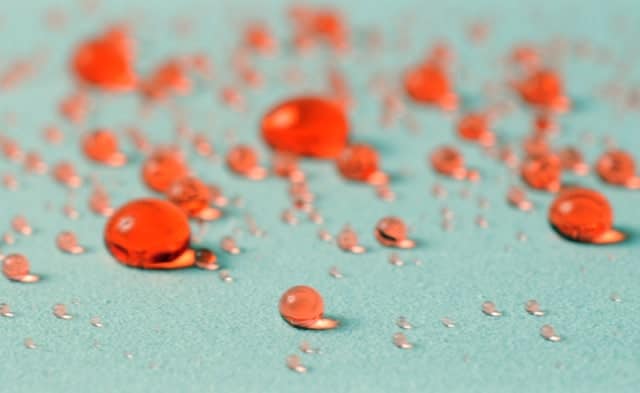
Ultra-Ever Dry is an advanced anti corrosion coating designed for industrial surfaces. Using nano-scale technology, it creates a protective barrier that prevents liquid adhesion, reducing corrosion and contamination in harsh environments.
Superhydrophobic & Oleophobic: Repels water, oils, and moisture-based contaminants.
Easy Application: Can be sprayed or rolled onto clean, dry surfaces.
Self-Cleaning Effect: Liquids bead up and roll off, carrying dirt away.
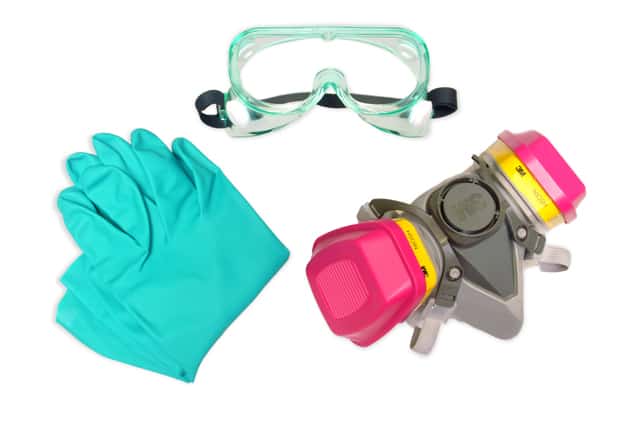
Non-Toxic Formula: Safe for use in workplaces (refer to SDS for handling).
Important Limitations: Does not dry clear; not suitable for glass or high-friction areas.
Industrial Machinery Prevents rust and moisture damage.
Marine Equipment Protects against saltwater corrosion.
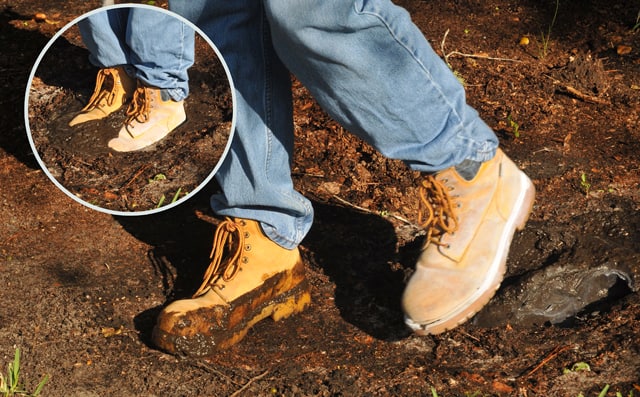
Construction Tools Reduces buildup of mud, cement, and grime.
Warehousing & Logistics Keeps metal surfaces cleaner for longer.
Not for Windshields/Glass Dries opaque; obscures visibility.
Surface Prep Required: Must be clean, dry, and grease-free before application.
Reapplication Needed. Wear and abrasion reduce effectiveness over time.
Slippery When Wet: Avoid use on walkways or safety-critical surfaces.
Some of the ways that Ultra-Ever Dry can be used.
Product Code | Model | Colour | Quantity (L) | Notes |
CHU4002 | Bottom Coat | Translucent White | 3.7 | Average Coverage: 23 m² |
CHU4004 | Bottom Coat | Translucent White | 18.9 | Average Coverage: 116 m² |
CHU4008 | Bottom Coat | Translucent White | 189 | Average Coverage: 1,150 m² – Ships in 200 Litre drum |
CHU4012 | Top Coat | Translucent White | 3.7 | Average Coverage: 23 m² |
CHU4014 | Top Coat | Translucent White | 18.9 | Average Coverage: 116 m² |
CHU4018 | Top Coat | Translucent White | 189 | Average Coverage: 1,150 m² Ships in 200 Litre drum |
Not for Windshields/Glass Dries opaque; obscures visibility.
Surface Prep Required: Must be clean, dry, and grease-free before application.
Reapplication Needed. Wear and abrasion reduce effectiveness over time.
Slippery When Wet: Avoid use on walkways or safety-critical surfaces.
The bottom coat serves as a primer and effectively bonds to most materials. It creates a consistent surface for the top coat to adhere to and interacts with it to form a self-assembling texture. This texture features patterns of geometric shapes along with billions of tiny spaces in between. The surface includes “high points” that contribute to a low surface energy, causing water droplets to make contact with only a small percentage of the coating. The portion of the water droplet that does not touch these “high points” is held together by the intermolecular cohesive forces of the water molecules.
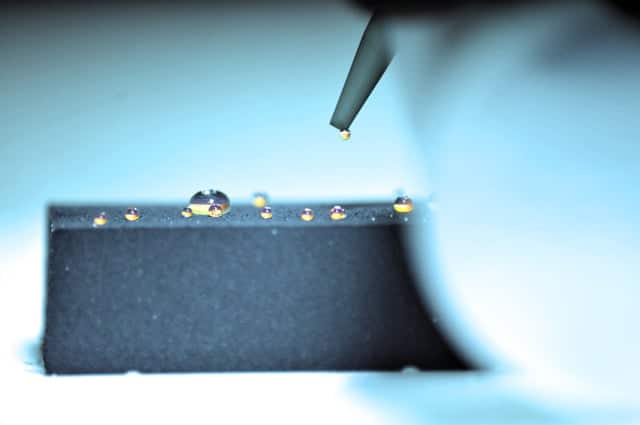
Ultra-Ever Dry® is a surface protection coating that creates a solid/liquid contact angle of 160-175 degrees in the air. In comparison, well-known windshield water repellents have a contact angle of around 110 degrees and are only hydrophobic. The superhydrophobic contact angle achieved by Ultra-Ever Dry® enables the self-cleaning properties associated with the product.
The working temperature range for a coated surface is from -34°C to 149°C once it has been applied. We would recommend further testing for any application that will be exposed to temperatures above 149 °C. The coating should be applied at temperatures between 10°C to 32°C.
Please note that the coating has a hazy translucent white appearance. Almost any material is a candidate for application: steel, aluminium, other metals, plastic, leather, fabric, wood, concrete, etc. The coating can be applied to and will bond to smooth surfaces. Preparing an already cleaned surface with heavy-duty scotch brite and/or sanding the surface with 320-800 grit sandpaper will improve adhesion. Ultra-Ever Dry® is not recommended for use on acrylics due to the high solvent content.
Ultra-Ever Dry® surface protection is significantly more abrasion resistant than previous superhydrophobic materials, registering a result of 30 cycles with a CS-10 wheel and 1000g load on the Taber Abraser before droplets no longer roll off the coating at a slope of 5 degrees from horizontal. The coating may still be superhydrophobic at this point, but droplets may “pin” or stick in the abraded area, and may not roll off until the substrate is tilted to a greater degree. If abrasion is a concern, testing is recommended. If the coating is removed due to repeated or severe abrasion, it can be reapplied.
Perhaps. In many situations, the superhydrophobic nature of the material may be diminished but the remaining top coat and bottom coat still provide the functionality of keeping the coated material from getting wet, iced up or corroding. This is application dependent.
The standard product is a hazy translucent white. We do not have a transparent formula at this time. Custom colours are not available at this time. It is recommended to try the coating in an inconspicuous area first if the colour is important.
250 square feet or 23 square meters at a dry film thickness of 13 microns.
Bottom Coat: Allow 30-60 minutes of dry time before applying the top coat. A heat gun/blow dryer may be used on a low setting to decrease dry time.
Top Coat: The coating will become superhydrophobic within 15-30 minutes of the top coat application. Allow 2 hours of additional dry time for good results.
Typically, the shelf life of the product will be four years when stored between 4°C and 40°C.
Ultra-Ever Dry® coating is adversely affected by ultraviolet (UV) light, reducing its useful life. Additional Ultra-Ever Dry formulas are being developed to reduce the effect of UV light.
As with most materials and coatings, this will depend on the chemical. In general, it is resistant to a wide range including many water-based acids and bases. It may or may not be compatible with oil-based liquids, since these substances have varying values of surface tension and liquids with low values of surface tension are not compatible with Ultra-Ever Dry®. Testing may be required to ensure proper compatibility. Ultra-Ever Dry® surface protection will not work with organic solvents including, but not limited to: acetone, xylene, t-butyl acetate, naphtha, MEK, etc.
Soaps and detergents will cause the surface of the coating to “wet-out”. Once these chemicals are removed (using low-pressure water), the superhydrophobicity will generally return. Alcohols and solvents will dissolve/remove the coating.
Strong acids and bases are typically not a problem. Testing has been completed with sulfuric, hydrochloric, and phosphoric acid with excellent results. We have also seen good results shedding strong caustic and some bleach solutions.
Yes, Ultra-Ever Dry® surface protection coating is corrosion resistant. Increasing the bottom coat thickness will increase longevity. Applying Ultra-Ever Dry® on top of existing painted surfaces, polyurethane coatings or other treated surfaces will increase the effectiveness and longevity of the pre-existing treatment.
Ultra-Ever Dry® surface protection coating is best applied using a spray method, either with traditional air-compressor driven HVLP paint sprayers, airbrush paint sprayers or by the Ultra-Power Sprayer and the Ultra-Mini Sprayer. NOTE: Both parts (top and bottom coat) are required for all applications of Ultra-Ever Dry. We do not have data showing consistent results with other coating methods at this time.
Note: With all sprayer options, it is important to adjust the volume to allow Ultra-Ever Dry to be applied in a fine mist.
Ultra-Mini Sprayer: For small jobs. Remove filter at the bottom of the dip tube before use.
Ultra-Power Sprayer: For medium/large jobs. Includes 1.0 mm needle/tip set. Volume should be set between low and medium to create a fine mist.
HVLP Spray Gun: For medium/large jobs. Use Warwick 881H or similar, 1.7 mm needle/nozzle set. Air conditions: cool, dry, 40-45 psi line pressure, 24-28 psi working pressure. Create a fine mist.
Airbrush: For small jobs. Use Iwata NEO BCN or similar, tip size = 0.5 mm. Air conditions: cool, dry, 10-60 psi working pressure. Create a fine mist.
See specific sprayer manufacturer instructions for safe and proper usage.
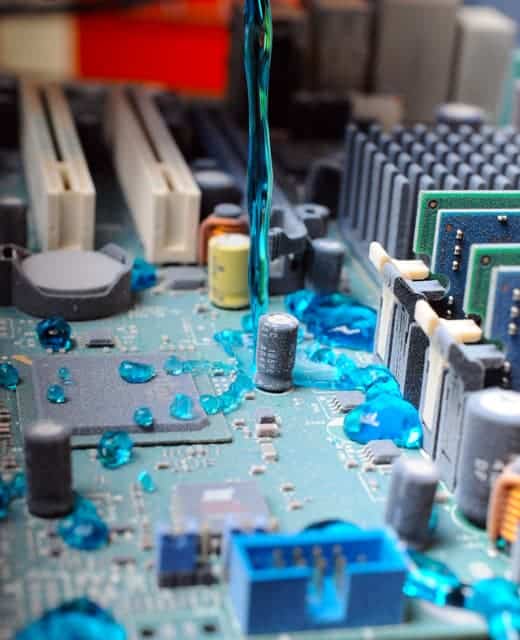
No, it is not electrically conductive. It can be safely used to coat electric motors, switches, electrical components, electronic subjected to the elements, light fixtures, etc.
The passing of air through the coating is dependent on the substrate. There are surfaces where the coating can act as a liquid repellent under low pressures but allows for the permeation of gases or vapor. If the bottom coat is applied too thick and makes a continuous film across the pores of the substrate, then air transmission will be diminished.
Polymer binders do not offer flammability resistance as polymers are carbon-based molecules and therefore will eventually burn or melt. Please note, however, that the dry coating thicknesses are generally only about 25 microns. We expect the overall flammability will be determined by the article being coated. We advise application-specific testing if flammability is a concern.
Yes, after few washes and in some cases after a single wash.
This depends on the type of substrate, the depth of the submersion, the length of time the material is submersed, and the specific application. Steel coated with Ultra-Ever Dry® has been immersed in salt water for 30 days at depths of less than 12″ without any corrosion effect. The surface may lose superhydrophobicity based on the saturation of the Top Coat but can remain corrosion-free because of the protective Bottom Coat layer. Additionally, increased thickness of Bottom Coat (applied properly with multiple thin passes) can increase the longevity in these applications. In all cases, the Top Coat will eventually saturate and wet-out over time, with the saturation time being related to the depth of the submersion.
No, this is not a good application, unless the fluid is slow-moving (laminar flow). In most cases, the liquid flowing through piping will be turbulent, causing Ultra-Ever Dry® surface protection to abrade away.
The whitish coating that comes off in your hands if you rub it is excess topcoat particles that did not bond to on the bottom coat. NOTE: Due to the natural oils in the skin, excessive handling with bare hands of treated materials can cause a reduction in performance.
All sales are final. We are unable to accept returns on the product because of the shelf life (4 years). Ultra-Ever Dry® is stamped with a “best by” date and because of that, returns are not practical.
No, Ultra-Ever Dry® is not produced using any Ozone Depleting Substances (as defined in the Kyoto Protocol or listed in Annex A of the Montreal Protocol, as amended.
If there is no water or other liquid available to clean the coating, then the coating is not effective. It is not smooth or slick, it is actually a rough surface and may actually end up holding more powder in this application.
There is no silicone, but there is a non-crystalline, fumed silica in the Top Coat (it is listed on the Safety Data Sheet).
All proprietary ingredients are non-hazardous.
For the bottom coat
For the acetone top coat
Our product can be used on cars but we recommend only using it underneath the vehicle. It is not recommended for use on body panels or windows/windshields because of the translucent white colour. It is recommended to try the Ultra-Ever Dry in an inconspicuous area first if the colour is important. It will cover a gloss paint with a dull, matte finish. Some exceptions to this recommendation are using Ultra-Ever Dry on work vehicles such as cement trucks or off-road vehicles where aesthetics are not as important as cleanliness, anti-corrosion, anti-icing, and maintenance.
Surfaces coated with Ultra-Ever Dry® will not prevent oil-based paints from being applied, due to the solvents in the formulas. It has been shown to be somewhat effective with water-based paints however the majority of spray paints are oil-based.
We do not recommend applying Ultra-Ever Dry® surface protection coating to the bottom of a boat or ship. The flow is quite often turbulent in these areas, and this high energy (and high velocity) flow can damage and/or remove the coating. Ultra-Ever Dry may have potential on slower-moving and less turbulent applications, such as the bottoms of canoes or kayaks, but we do not have data for these applications yet.
We have not had the opportunity to test Ever Dry for these applications.
Ultra-Ever Dry® does protect electric connections from water and moisture and is non-conductive, but Ultra-Ever Dry® is not clear. It dries to a translucent white colour, so we cannot recommend spraying phones with it.

Looking for product information? Want to discuss your fabrication requirements? Need a quote?